
Electric Car Road Trip Planner Essentials: The 2026 Guide to Stress-Free Long-Distance EV Travel
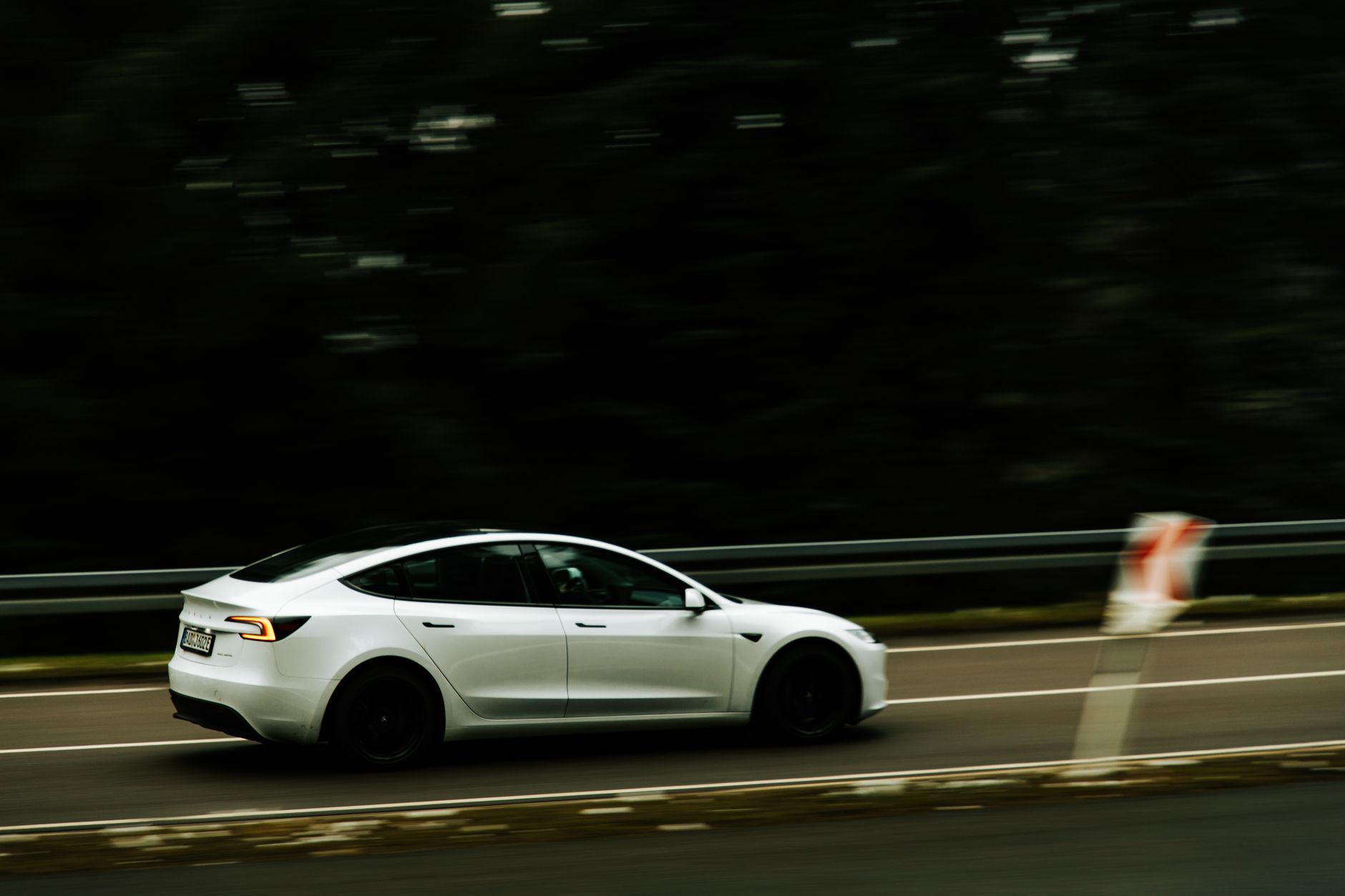
The summer of 2026 is shaping up to be the busiest season yet for electric vehicle road trips. With the NACS charging standard now live across virtually all new EVs and the Electrify America network finishing its nationwide CCS-to-NACS retrofit ahead of schedule, drivers are finally facing a landscape where charger anxiety is giving way to actual planning anxiety. The question is no longer can you take your EV cross-country—it’s whether your route strategy is smart enough to handle real-world surprises.
That’s where nailing your electric car road trip planner essentials becomes the difference between a smooth journey and a white-knuckle range gamble. This guide cuts through the generic advice and gives you the specific tools, contingency frameworks, and app workflows that experienced EV road-trippers actually use in 2026.
Why Your EV Road Trip Planner Needs a “Charging Cushion” Strategy
Most first-time EV road trippers make the same mistake: they plan their stops at exactly the chargers their car needs to reach. This works in a spreadsheet. It fails catastrophically on I-80 in Wyoming when a charger is down, occupied, or throttled to 50kW by extreme heat.
The pros build in charging cushions—deliberate buffer zones that keep you out of the danger zone. Here’s the framework:
- Never plan to arrive below 15% state of charge. This gives you roughly 40-60 miles of emergency range to reach an alternative charger if your primary stop fails.
- Identify backup chargers within 30 miles of every planned stop. Tools like A Better Routeplanner (ABRP) let you layer these manually; take the five minutes to do it.
- Prioritize charging locations with multiple stalls and networks. A site with 8 NACS stalls across two networks (say, Tesla Supercharger plus EVgo) beats a shiny new 350kW single-stall site every time.
Real-world example: The corridor between Denver and Salt Lake City still has long stretches where charger density is thin. Experienced planners stop at Glenwood Springs, Colorado (multiple Supercharger stalls plus local Level 2 backup) rather than pushing to the newer, faster—but single-point-of-failure—charger in Grand Junction.
The Three-App Stack: Building Your Redundant Planning System
No single app handles everything in 2026. Your electric car road trip planner essentials toolkit needs three layers working together:
Layer 1: A Better Routeplanner (ABRP) — The backbone for route optimization. Input your exact vehicle model, battery degradation percentage, expected weather, and payload weight. ABRP’s 2026 database now includes real-time stall availability predictions based on historical usage patterns, not just “is the station online.”
Layer 2: PlugShare — The human intelligence layer. Filter for recent check-ins within 24 hours. A station showing green on the network’s app can be down for maintenance; PlugShare’s user reports catch this. Pay special attention to “successful charge” confirmations with photos of the actual stall numbers.
Layer 3: Your vehicle’s native navigation — Tesla’s trip planner, Ford’s PowerMyTrip, or Hyundai’s system. Use this for in-car execution, not initial planning. These systems get real-time battery data your phone apps can’t access, but they’re conservative and often skip faster charging opportunities that require slightly longer initial drives.
Pro tip: Screenshot your ABRP route with backup stops before departure. Cellular dead zones still exist, especially on scenic routes like Highway 101 in Northern California or stretches of I-70 through the Rockies.
Timing Your Charging Stops: The 20-80 Sweet Spot vs. The Long Haul
Understanding when to stop matters as much as where. The charging curve of your battery—how fast it accepts power at different states of charge—should dictate your strategy.
For most 2026 EVs with 400V or 800V architectures:
- The 20-80% strategy: Stop when you hit ~20%, charge to ~80%, then roll. This maximizes time in the fastest portion of the charging curve. Typical session: 18-25 minutes. Total trip time is often faster than one marathon charging session.
- The exception—long desert stretches: On routes like Phoenix to Las Vegas or Amarillo to Albuquerque, you may need to push to 90-95% at your last reliable charger before a gap. Build this into your plan explicitly; don’t wing it.
Temperature matters enormously here. A 2026 Kia EV6 charging at 10% in 75°F weather might pull 233kW. At 95°F after hours of highway driving, that same stall could start at 180kW and taper faster. ABRP’s weather integration helps, but add 10% buffer time to estimates in summer heat.
The Overlooked Essentials: What Goes In Your Car, Not Your Phone
Software gets the attention, but physical preparation separates smooth trips from disaster recovery. Pack these electric car road trip planner essentials in your vehicle:
- Multiple charging adapters — Even with NACS dominance, carry J1772 (for Level 2 backup), CCS (for older DC fast chargers not yet retrofitted), and a Tesla-to-J1772 adapter if your vehicle uses the older standard. The 2026 transition period still has gaps.
- A 50-foot 12-gauge extension cord — For the rare but real situation where you need to reach a 120V outlet at a hotel or campground. It’s slow (3-5 miles per hour), but it can save you from an unplanned overnight.
- Tire inflation kit and pressure gauge — Underinflated tires kill range by 3-7%. Check pressures at every stop; EVs are heavier and wear tires faster.
- Window shades and vent strategy — Pre-cooling while plugged in preserves range. A shaded cabin needs 30-40% less AC energy to cool down.
Documentation matters too. Screenshot confirmation codes for hotel charging reservations. Several 2026 hotel chains (Marriott’s EV-forward properties, select Hiltons) now guarantee reserved charging spots, but front desk staff don’t always know the system.
Handling the Unexpected: Real Contingency Playbooks
Even perfect plans fail. Here’s how experienced EV travelers handle the three most common 2026 road trip disruptions:
Scenario 1: Planned charger completely down Execute your pre-identified backup within 30 miles. If that’s also down, use PlugShare’s “filter by distance” to find the nearest alternative, then manually reduce speed to 55-60mph to extend range. Drafting behind a semi-truck at safe distance can add 10-15% efficiency as a last resort.
Scenario 2: Unexpected headwinds or mountain climb Wind resistance increases exponentially with speed. A 20mph headwind at 75mph effectively adds 40mph of resistance. Slow to 65mph immediately. For sustained climbs, pre-condition your battery if your vehicle supports it—Tesla’s “Trip” preconditioning and Porsche’s Taycan mountain mode both optimize thermal management before steep grades.
Scenario 3: Arrival at charger with all stalls occupied Use your vehicle’s app to join the queue if supported (Tesla, Rivian). For non-queued networks, the etiquette is 10 minutes of waiting, then politely asking drivers how long they plan to stay. Never unplug someone mid-session. If wait exceeds 20 minutes, execute your backup plan.
Conclusion
The infrastructure gap that made EV road trips genuinely risky has largely closed in 2026. What remains is a planning sophistication gap—travelers who treat EV trips like gas-car trips with an app slapped on top, versus those who build resilient, multi-layered strategies.
Your electric car road trip planner essentials boil down to this: cushion your range, triple-redundancy your apps, charge in the sweet spot of your battery’s curve, and pack physical backups for the digital edge cases. The best road trip isn’t the one with the fastest theoretical charging speed—it’s the one where you never feel the anxiety that used to define EV travel. Plan like a pessimist, drive like an optimist, and enjoy the quiet, torque-rich miles that only electric road trips deliver.