
Best EV Home Charger Installation Cost Breakdown: What You’ll Actually Pay in 2026
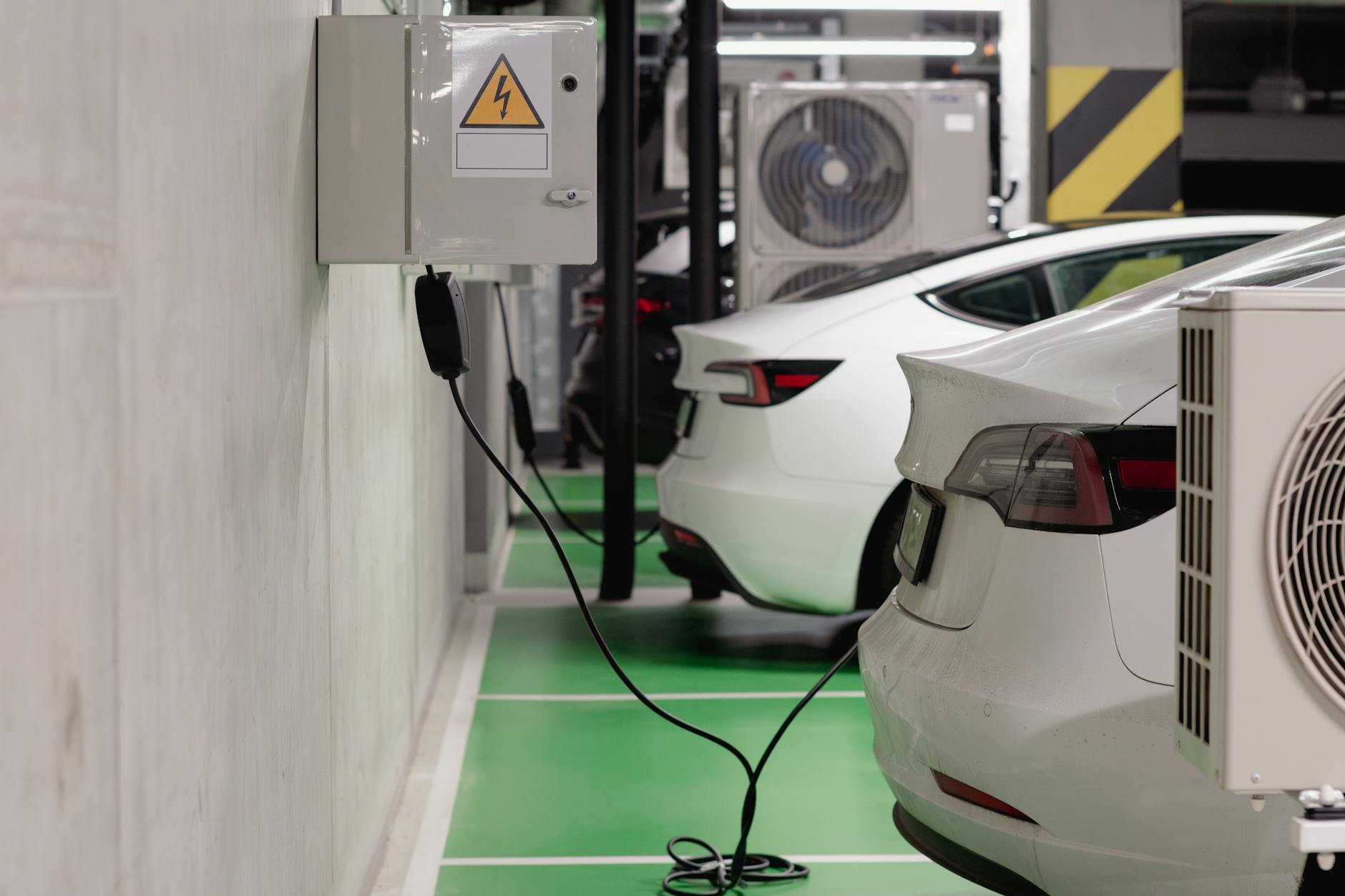
The EV charging landscape is shifting fast. With InsideEVs recently reporting that over 60% of new EV buyers in early 2026 are prioritizing home charging infrastructure over public network reliance, the question isn’t whether to install a home charger—it’s understanding exactly what you’ll pay before the electrician shows up. If you’re searching for the best EV home charger installation cost breakdown, you’re already ahead of most buyers who get sticker-shocked mid-project.
Here’s the reality: the charger itself is often the smallest line item. What separates a smooth $800 install from a $4,000+ headache is knowing the hidden cost layers upfront. This guide walks you through every dollar, decision point, and 2026-specific pricing quirk so you can plan like a pro.
Why Installation Costs Vary So Wildly (And How to Predict Yours)
Installation quotes for the same Level 2 charger can range from $500 to $3,500 depending on your home’s electrical situation. The biggest variable? Your electrical panel’s current capacity and physical location relative to your parking spot.
The three cost tiers break down like this:
-
Tier 1 ($500–$1,200): Your panel has open 240V breaker slots, it’s located in or near your garage, and your garage already has adequate wiring pathways. This is the “unicorn” scenario—common in homes built after 2010 with attached garages.
-
Tier 2 ($1,200–$2,500): Your panel can handle the load but needs a new dedicated 40A or 50A breaker, or the wiring run exceeds 50 feet through finished spaces. Most 1990s–2010s homes land here.
-
Tier 3 ($2,500–$4,500+): Panel upgrade required (100A to 200A service), trenching for detached garages, or main service line replacement. Older homes, rural properties, and detached setups often trigger this.
Pro tip for 2026: With the Inflation Reduction Act’s 30% federal tax credit (up to $1,000) still active through the end of this year, even Tier 3 installs become more palatable. But that credit covers equipment and labor—not permits or inspections in all cases. Check your state’s specific interpretation.
The Charger Hardware: What “Best” Actually Means for Your Budget
The word “best” gets thrown around loosely in EV charging. For installation cost purposes, you need to separate reviewer favorites from electrician-friendly options that won’t inflate your labor bill.
Hardwired vs. plug-in NEMA 14-50: This single decision swings your install cost by $150–$400. Hardwired units (like the ChargePoint Home Flex or Wallbox Pulsar Plus) require more labor but avoid the $80–$150 NEMA outlet cost. However, if you ever need to swap chargers, hardwired units cost more to service.
2026’s sweet spot for cost-conscious buyers: The Emporia EV Charger ($399) and Grizzl-E Classic ($459) deliver 40A–48A charging without the premium branding tax. Both are UL-listed, work with 240V hardwired or NEMA 14-50 setups, and have proven reliable enough that electricians don’t charge extra “unknown equipment” premiums.
One emerging trend to watch: Bi-directional chargers (Ford Charge Station Pro, Wallbox Quasar) are gaining traction with V2H (vehicle-to-home) capability. But in 2026, these add $1,500–$2,500 to hardware costs and often require specialized electrical configurations. Unless you own a Ford F-150 Lightning or similar V2H-capable EV, skip this for now.
Permits, Inspections, and the “Paperwork Tax”
Every jurisdiction handles EV charger permitting differently, and this is where DIY estimates often fall apart. Here’s what the best EV home charger installation cost breakdown must include:
| Cost Component | Typical Range | Notes |
|---|---|---|
| Electrical permit | $50–$300 | Required nearly everywhere; some cities bundle with general electrical permits |
| Inspection fee | $0–$150 | Often included in permit cost, but not always |
| HOA approval (if applicable) | $0–$500 | Some HOAs require architectural review; increasingly being prohibited by state law |
| Utility notification | Usually free | Required in areas with time-of-use rate structures; smart meter may need activation |
The 2026 wrinkle: California, Colorado, and Washington now have “over-the-counter” EV charger permits—same-day approval for standard installs under $1,500 labor value. If you’re in these states, budget 2–3 hours less for project timeline, not necessarily less cash.
Hidden gotcha: Some municipalities require load calculations submitted by a licensed electrical engineer for panel upgrades. That engineering stamp runs $200–$600 and isn’t always disclosed in initial quotes. Ask explicitly: “Will this install trigger any engineering review requirements?”
Electrical Upgrades: The Budget Killer You Can Predict
Nothing inflates an EV charger install like discovering your 100-amp service panel can’t handle a 40-amp continuous load. The National Electrical Code requires your EV circuit to use no more than 80% of breaker capacity continuously—meaning a 50A breaker supports 40A actual charging, which demands 9.6kW capacity.
When do you absolutely need a panel upgrade?
- Your home has 100A service and electric dryer, water heater, or HVAC
- Your panel is full (no open breaker slots) and uses outdated fuse systems
- You’re installing a 48A–60A charger on existing 100A service
Cost realities for 2026:
- Panel swap (100A to 200A): $1,800–$3,000 including new panel, breakers, and labor
- Service line upgrade from utility: $2,000–$5,000 if your incoming lines are undersized
- Load management device alternative: $300–$600 for products like the DCC-9 or SimpleSwitch, which throttle EV charging when other appliances run
That last option is the insider secret most electricians won’t volunteer. A load management device can dodge the panel upgrade entirely, paying for itself in months. Not all chargers support this, so verify compatibility before buying.
Smart Features vs. Dumb Savings: Where to Splurge or Skip
Modern EV chargers come loaded with connectivity: app control, scheduling, energy monitoring, solar integration. But every smart feature adds cost—and sometimes ongoing subscription fees.
Worth paying for in 2026:
- UL 2594 and ENERGY STAR certification: Non-negotiable for safety and rebate eligibility
- WiFi scheduling: Critical if your utility has time-of-use rates; off-peak charging can cut costs 40–60%
- Power sharing: If you plan dual-EV households eventually, future-proof now
Skip these to save:
- 4G/LTE connectivity: Your home WiFi is sufficient; cellular backup adds $100–$200 hardware + monthly fees
- Integrated cable management: Third-party hooks and hangers cost $15–$30 vs. $80–$120 built-in premiums
- Color touchscreen interfaces: Phone apps handle configuration; the screen becomes a sun-faded liability
Current example: The ChargePoint Home Flex ($749) includes robust scheduling and utility rate integration. The nearly identical-spec’d Mustart Travelmaster ($329) lacks app connectivity but charges at the same 40A speed. If you already have a smart electrical panel (Span, Schneider Electric), the cheaper charger plus panel intelligence often beats integrated smarts.
Pulling It All Together: Your 2026 Installation Budget
Here’s a realistic best EV home charger installation cost breakdown for three common scenarios this year:
Scenario A: Modern Home, Simple Install
- Emporia Level 2 charger (NEMA 14-50): $399
- NEMA outlet install, 10-foot run: $650
- Permit: $85
- Total: $1,134 (after 30% tax credit: $794)
Scenario B: Mid-Century Home, Panel Has Space
- Wallbox Pulsar Plus (hardwired 48A): $649
- 60-foot wiring run, new 60A breaker: $1,400
- Permit + inspection: $175
- Total: $2,224 (after tax credit: $1,557)
Scenario C: Older Home, Needs Panel Upgrade
- Grizzl-E Classic + DCC-9 load manager: $859
- Electrical panel upgrade to 200A: $2,200
- Permit, inspection, utility coordination: $400
- Total: $3,459 (after tax credit: $2,421)
The spread is massive, but so is your control. Get three electrician quotes minimum, specify your exact charger model upfront, and ask each bidder to break out labor, materials, permits, and contingency separately. Vague “turnkey” quotes hide the most markup.
Final Thoughts: Install Smart, Charge Cheaper
Understanding the best EV home charger installation cost breakdown isn’t just about avoiding surprises—it’s about optimizing your total cost of EV ownership for years. A well-planned install with proper amperage, smart scheduling, and future-ready wiring pays dividends every night you plug in.
As InsideEVs and other industry watchers have noted, 2026 is the year home charging shifts from early-adopter luxury to mainstream necessity. The buyers who thrive are those who treat installation as a deliberate project, not an afterthought. Get your quotes, claim your credits, and charge forward with confidence.